
A Little Responsibility in Wine Journalism Please
 The other day I was making the point, emphatically, that a great deal of responsibilities lies with those who are attempting to communicate something of substance to the media. Their responsibility is in providing good, true, honest information. The reason this is so important is because things get repeated, then repeated again, then spread around and repeated a number of other times until what you originally communicated becomes common knowledge; it becomes the basis for understanding something or some issue. What if you got it wrong?
I don’t know if this particular news story about millennial wine drinkers vs baby boomer wine drinkers is a result of the original information never being very good to begin with or if it’s just careless reporting. Either way, the tone, substance and message in this story is wrong. But more importantly, it is a message that has spread far and wide and is accepted by many, despite being wrong.
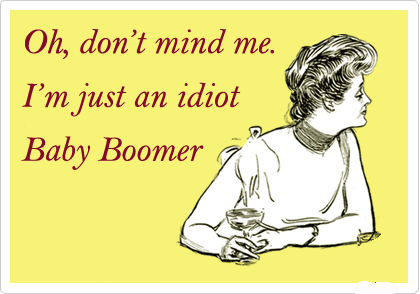
That incorrect message is this: Millennial wine drinkers are fundamentally different from their parents in ways that identify the Baby Boom wine drinkers as dopes, unthinking ratings followers, with no curiosity.
The article is entitled “Why Boomers Should Drink Wine Like Millennials” and offers “5 Wine Drinking Tips From Millennials” that the author suggests we (Boomers, presumably) ought to try….Because, presumably, these five things will be new to Boomers. What kind of insulting advice do Boomers get?
1. Rely on your own taste buds. Marketers have learned that Millennials taste for themselves and decide what they like rather than listening to experts.
Yes…..Because this is something that Boomers never did. Boomers never made their own decisions about and took responsibility for their own preferences. Boomers waited and waited until an expert told them what to drink. Thank goodness there were experts otherwise boomers never would have ever picked up a glass so stunned into inaction was this generation.
2. Embrace — and share — what’s new: “Because this generation is not as easily influenced or intimidated by experts, they don’t mind being neophytes….According to a survey conducted by the Wine Market Council, 85 percent of Millennials “frequently” or “occasionally” purchase unfamiliar brands. That number drops to 76 percent for Gen X’ers and to just 61 percent for their boring old parents.”
It’s kind of silly to ask, I know, but I wonder if it ever occurred to the author of this article that the reason Millennials more frequently purchase unfamiliar brands is because being younger, they are familiar with fewer brands than older drinkers who are probably familiar with many more.
3. Love a good tale. These consumers like wines that are made with “passion” and have a “story….This generation likes to know who’s making their wine and its members often favor mom and pop wineries.
One wonders how it was possible that so many mom and pop wineries emerged during the Baby Boomer’s reign as primary wine buyers given that this concept and appreciation of mom and pop wineries with stories is such a new development among Millennials.
4. Look for boutique wineries and shops. According to market research, Millennials have been driving the growing trend in buying more wines from small artisanal producers. Not all boutique wineries produce a great product, but as with any artisanal effort, it is less likely to have additives.”
It’s commonly known, I guess, that Baby Boomer wine drinkers really, really liked having additives in their wine and this is why “artisanal producers” never existed until the Millennials started buying wine!
5. And perhaps most important: Make it fun. Marketers have found that Millennials often avoid what they consider stodgy old labels depicting castles and hilly vineyards. This is one reason we now see so many creative graphics on bottles — everything from drawings of cupcakes to cute animals to curvy pinup ladies. The message is: Don’t be overly serious.”
Ah! The author and researchers have figured it out. Baby Boomers only bought wines that had depictions of vineyards and castles on them. It’s a miracle that Randall Grahm at Bonny Doon and John Williams at Frog’s Leap were ever able to survive when Baby Boomers were in command of the wine market.
As I mentioned earlier, it’s very important that producers of wine who put information out to journalists and even on social media act responsibly and not trade in bogus, unfounded, untrue, prejudicial information for the simple reason that it could become understood as gospel. But the fact is, it’s equally important that journalists act responsibly. Otherwise, you get articles like this one.


Especially #3: Chances are the vast majority of the wines and wine experiences the Millennials are discovering in so many “new” ways were created by boomers. From the tone of this article you would think that the whole wine industry sprung into existence in the last 15 years. But give the narcissists credit where it is due: it did not exist to them until they recognized it exists.
Hah!
I wrote a couple of wine-related articles for NextAvenue.com. I was continually told that their readers didn’t want to get bogged down information.