
The Coming Repeal of the Three Tier System for Wine, Beer, and Spirits
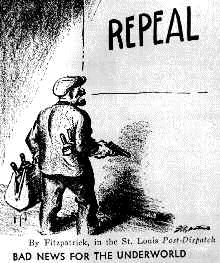 When bribes are described as “the process” and when lawmakers admit they are happily in the pockets of alcohol wholesalers, it’s clear it’s time to change something. And everyone knows it:
For the majority of alcohol beverage producers, it has become abundantly clear that single most important impediment to their continued success is the existence of the State-Mandated Three-Tier System (SMTTS) in state after state across the country.
The artisan wine, beer and spirit producers know that a repeal of the SMTTS is as necessary today as Repeal of Prohibition was in the early 20th century. Just as Prohibition created the circumstances allowing for a small number of criminals to control alcohol distribution then, today the SMTTS has created the circumstances that allow a small cartel of middlemen to take over and control the alcohol distribution industry and they are willing to do whatever is necessary to keep it that way.
The SMTTS in place in most states prevents small wineries from supplying a select few restaurants and retailers with their unique products unless they agree to deliver what amounts to kickbacks to wholesalers, which are required for selling product to a specialty retail store or restaurants.
It’s true also that in the vast majority of states, wine and spirit retail shops find themselves at the mercy of the alcohol wholesaler cartel and benefit as well from repeal of the SMTTS. The SMTTS requires wine retailers to procure their inventory from this continually shrinking group of middlemen. As competition increase from internet sales and big box stores, these smaller, specialty retailers will need a way to differentiate themselves and add value that goes beyond discount pricing—a game they can’t win. The key to their success will be to offer their customers a more diverse and eclectic selection of artisan beers, wines and spirits. What they will, and now do, find, however, is a cartel of middlemen who can’t offer this kind of interesting and eclectic product inventory. But more important the SMTTS protects the cartel from competition by prohibiting the retailer from seeking products directly from the producers.
Finally, consider that the State-Mandated Three Tier System is today in no way necessary for the states to undertake their most important tasks with regard to alcohol: collect taxes, prevent underage drinking and undermine abusive marketing and use of alcohol. It has become abundantly clear that wineries and retailers are perfectly capable of apply for licenses and remitting taxes (both state and excise) without the help of a wholesaler. Direct shippers successfully deliver these taxes to the states into which they ship. Retailers successfully deliver sales taxes to the states. There is no foundation for the argument that wholesalers are the necessary point of collection of state taxes on alcohol.
As for keeping ownership of the tiers separate, another defense of the SMTTS, this too is easily accomplished without mandating that all sales of alcohol in a state move from producers to wholesalers to retailers. No cross ownership of tiers comes into play when producers sell directly to consumers or directly to retailers.
It’s also untrue that requiring all sales of alcohol go through a wholesaler middleman prevents undue influence of the producer over the retailer. This isn’t 1914. It’s 2014 and this kind of “tied house”, industry corruption that helped create the problems that brought us Prohibition are unfathomable in an economy of hyper competition and, more importantly, efficient logistics that allows consumers to have products delivered to them over night from across the country.
Rather, the real source of corruption in the alcoholic beverage industry is a direct result of the existence of a State Mandated Three Tier System, the advantage it delivers to the only people who benefit (the wholesaler cartel), and the incentive it creates for wholesalers to do whatever is necessary to protect their government granted protection from competition. What else accounts for the tens of millions of dollars that wholesalers throw at politicians annually in the guise of “campaign contributions”?
In a political system where politicians are constantly campaigning and need money to do so, and where the wholesaler cartel are more than willing, and able due to their protected positions, to pony up the money, it should come as no surprise that lawmakers possess great incentive to take the payola the wholesaler cartel offers in exchange for more political protection from competition.
What else explains the now 25 year effort to merely allow wineries to ship wine directly to consumers that still is not allowed in all states? What else explains that in only 15 states are out-of-state wine shops allowed to ship wine to consumers? What else explains the altogether corrupt and ludicrous “Franchise Laws” in numerous states that defines wholesalers as “franchisees” when they don’t sell one brand, but rather hundreds of brands, and are protected against those brands changing to a different wholesaler? What else explains that in numerous states artisan distillers and craft brewers can’t ship their products, let alone sell them directly to retailers and restaurants, but must go pay kickbacks to wholesalers to get their wine to market? What else explains the fact that the SMTTS still exists?
During Prohibition the corruption of public officials was one of the primary problems that actually convinced the public to abandon Prohibition. Paid off by the mob, bootleggers and gangsters (ancestors of today’s wholesaler cartel), public officials protected those who controlled the illicit alcohol trade. Today, lawmakers protect the State Mandated Three Tier System, despite it delivering no discernible benefit to the public, the consumer or the alcohol industry.
I don’t want to give the impression that I believe that alcohol wholesalers are merely protection-seeking cousins of gangsters who foment corruption, stifle innovation in the alcohol industry, boot consumer interests aside and provide no real benefit.
The fact is, putting boxes on trucks then taking the boxes off trucks is honest work. There will always been a need for unthinking brute force labor. However, the need to legally mandate the use of box-puter-on-ers and taker-off-ers has long outlived its usefulness. Today, the SMTTS has become a parody of the much more innovative crime syndicates of Prohibition days.
The demise the State Mandated Three tier System will come on a state-by-state basis. It will be driven by the rise of craft beer and craft distillers who today are feeling the brunt of the impact of corrupt, unnecessary legacy system that serves no purpose today. But as their numbers increase and as it becomes apparent that their legitimacy alone can’t force change, these artisan brewers and distillers will demand change. They’ll ask for the right to ship their products direct. They will ask for the right to bypass the box-picker-up-ers and sell their and deliver their beers and spirits themselves to retailers and restaurants and pubs. But they’ll find that the wholesaler cartel and lawmakers stand in their way presenting the same old tired arguments that the wine producers and progressive retailers have heard all these years.
That won’t be enough. Because what’s coming is this: A coalition of brewers, distillers, wineries, progressive retailers and their consumer fans who will start making demands. The demands will make sense. The old wholesaler cartels and their defenders in government will begin to look silly. Lawsuits will be filed. The exposure of political payoffs from wholesalers will be highlighted at every turn by a media that knows perfectly well what’s going on and will become more and more willing to showcase the corruption.
Mark my word, a second Repeal is coming with the end of the State Mandated Three Tier System. It’s only a matter of time and effort.


Big, big, big money against a righteous few with no money. Sounds like a battle…david and Goliath . I hope they win. I am not for the destruction of wine and spirit wholesalers, just think there is room enough to change with the times.