
Does Terroir Equal Wine Quality or Just Opinion?
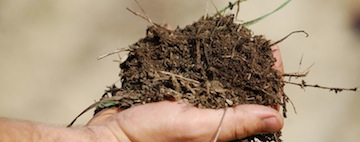 “The way that we decide what constitutes quality and typicity has to be drastically redefined.”
We are talking about wine here. This is the conclusion of Geneviève Teil, a very smart researcher for INRA, the French national agricultural research institute, who spoke with Decanter Magazine.
Her comments come in the context of the continual questioning of that country’s AOC appellation system, a system upon which America’s own American Viticultural Areas are based. The problem many have with the French AOC system is that committees are formed in order to taste wines that qualify for and desire to place an appellation on their label, such as “Bordeaux”. These committees are charged with determining whether these wines possess “typicity”, or taste like they should, given where they come from.
Step back for a moment and imagine the response to a proposal here in California that wines must be approved by a committee of tasters to be evaluated for the degree to which the wine tastes like they should, given where the grapes were grown. I suspect there wouldn’t even be a debate on this proposal. I suspect we all would merely chuckle at the suggestion and getting back to making just whatever the hell kind of wine we want to make.
But getting back to Ms. Tell. She goes on to say, “The problem is that many modern winemaking techniques have clouded the idea of what is typical. New oak is used to sweeten up the taste and add a touch of vanilla spice, cultivated yeasts encourage certain aromas over other ones…The AOC system has become an economic tool instead of a safeguard of our terroir.”
Here in California and across this country we’ve always know that our own AVA system and other systems like it are mostly economic (marketing) tools. And this won’t change for a very simple reason: There is no objective way to determine specific characteristics that result from specific terroirs, let alone the large swaths of land that are identified as official American Viticultural Areas such as “Russian River Valley”, “Sonoma Coast”, “Dry Creek Valley” or “Bordeaux”.
This reality is a slap in the face to notions of objective standards of regional typicity or “terroir”. But what is perhaps a more interesting issue is Ms. Tell’s contention that “The way that we decide what constitutes quality…has to be drastically redefined.”
Now, this strikes me as doable, but it is not a science project. It is a marketing project. “Quality” always has been and always will be a subjective idea. However, that doesn’t mean we can’t convince a majority of wine drinkers that a true wine of “quality” possesses balance among its primary components (acid, tannin, alcohol and fruit) or perhaps that a quality wine possesses extremes of soft, juicy dark fruit. It’s just a matter of convincing folks of what quality is, not proving it.
Back over in France, you’ve got a group of vintners who have made wines that have been rejected as AOC wines; that is, despite these wines technically qualifying to use the “Bordeaux” appellation on their labels based on how the wine was made and where the grapes came from, but a committee of tasters have determined these wines don’t quite taste enough the way they all believe wines from the particular region ought to taste. Given that a wine holding the “Bordeaux” label is a far more valuable commodity than a wine from Bordeaux due to not getting committee approval must hold the Vins de France appellation, you can understand why producers of these wines are upset.
There is a way to fix the problem presented by the tasting committees: Go to the American System and embrace the economic meaning of an official appellation, rather than some sort of “terroir” meaning. This would represent a drastic change to the French AOC system, but its value is found in that it would become an honest system.
For that matter, the French would do well to throw out ALL rules and regulations concerning the AOC system other than requiring that a wine that has “Bordeaux” or “Burgundy” on the label must be made with grapes from those appellations. Purists will scream that by not regulating HOW wines can be made the historic characteristics of a wine labeled “Burgundy” or “Bordeaux” will be lost to the whims of winemakers who choose to do what they want, thereby degrading the meaning of these and other historic French appellations.
The thing is this however: if wines made from grapes grown in a particular terroir or appellation do possess specific qualities resulting from a specific terroir, those characteristics will show through over a range of wines. Nothing will be lost, except the fiction that a group of tastes are qualified to determine what is or should be typical of a region’s and what is not, and therefore what is quality and what is not.


Tom, your close in part’…if wines made from grapes grown in a particular terroir or appellation do possess specific qualities resulting from a specific terroir, those characteristics will show through over a range of wines. ” is in fact what we have repeatedly found in Best of Appellation reviews be it from Santa Lucia Highlands Pinot Noir, Lake Eire Chardonnay, Long Island Merlot. We have done these and that is how it stakes up
The days of revolution are long past in France, so I doubt you’ll see a complete rejection of typicity in any AOC reform. It might also cause some confusion when a Syrah shows up in your glass that you poured from a bordeaux bottle. This might be in the Syrah grower’s interest, but probably not the consumer’s.
Call me Ron Paul, Tom. Blow up the entire appellation system tomorrow. Nothing should be forced to taste like anything. Every week in my tasting group I shuffle in my seat, wanting to just explode with this observation. I don’t know what’s “typical” and I doubt any two wine experts could decide on what’s “typical” for a given region, beyond what they have read or heard before as hearsay, and codified as groupthink.
I saw the movie recently about sommeliers and applaud the folks studying for their Supreme Court of Wine Diploma, along with the director who bravely documented their progress. But without turning this into a review of the movie (see my blog for that), the impression I got while these dudes were tasting these wines that could make or break their careers was “If I were I winemaker, I would make absolutely sure whatever I made fell between all the cracks of your Precious Tasting Grid.”
Forgetting the issue of AOC/Appellation systems, I take issue with this comment of yours, Tom:
“Quality always has been and always will be a subjective idea.”
The idea behind product quality is for the producer to put out a product that meets established standards–i.e., does a car really go from 0 to 60 in a nano-second? If so, it has met that standard of quality; does that winter coat with the newfangled material actually protect from sub-zero temperatures? If so, it has met that standard of quality.
Quality cannot be measured unless and until standards for it are set–that describes the wine industry better than your idea that quality is simply a subjective nonsense word.
The standard that was set for the French AOC system, weak as others may think it is, requires that the wines show what the system has determined to be “typicity.” How that is measured is yet another standard that is set.
Again, the problem is not with the concept of quality. The problem, as you aptly allude to, is with the recalcitrance of the American wine industry to set standards of quality and live by them.