
Wine and The Glory of Smoke Taint
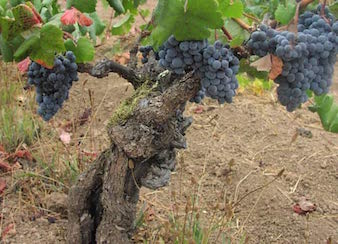 “I really, strongly feel that I want there to be some character about the fire in the wines. This is part of the vintage, and it’s going to be a part of my life, remembering this event. In 10 years, if I sit down and have a bottle of that smoky Cabernet, I want to remember the vintage…At the same time, I don’t want the wines to be disgusting.”
If there we ever more authentic words from a true grape farmer than these, I’ve never read them. In fact, I’m not sure I’ve ever read a more apt reaction to the truth of terroir.
The grape farmer is Will Bucklin of Old Hill Ranch and Bucklin fame in Glen Ellen as quoted in an article by Esther Mobley in the San Francisco Chronicle. The vineyard is perhaps the quintessential old vine vineyard, a patch of grapes so perfectly iconic and unique as you’ll find anywhere in California. However, as Esther describes, Will’s Old Hill Ranch Alicante Bouschet, just one of the 27 different varieties growing in the vineyard, was rejected by Ravenswood for smoke taint. He had harvest most of the grapes from the great vineyard before the fire, but some were still hanging and in the end, the fire got some of the vines and some of the grapes were exposed to days of hazy, smoky air.
I’d be interested in hearing the argument that a kiss of smoke in the resulting wines from his 2017 Bucklin Old Hill Ranch Cabernet or Old Hill Ranch Mixed Blacks is not reflective of the vineyard’s terroir or vintage. It seems to me it must be and the notion of honoring this unique vintage by inviting in just a kiss of smoke in the nose or on the palate is honorable.
But don’t forget Will’s last line: “I don’t want the wines to be disgusting.”
That’s just the thing about terroir. Wherever there is dirt or a dirt-like substance that will in some way support a grapevine, you have terroir. “Terroir” is not and cannot be a description of excellent or perfect growing conditions alone. It’s a description of, simply, growing condition. Some growing conditions, some terroir, produce grapes that result in disgusting wine. You generally don’t see grapes grown there.
Having tasted a number of Will’s wines, I am assured that there will be fine wines produced from his 2017 Old Hill Ranch grapes. And I’m honestly looking forward to a kiss of smoke in those and other wines for exactly the reason that Will is: I want to remember this vintage for its unique nature. It is the magic of vintage wine that it represents a singular season of grape growing and all the weather and climatic conditions that defined the season. Vintage variation is the DNA of a wine.
As I read what I just wrote I’m keenly aware that it could come off as a justification to purchase wine that others will call tainted. I don’t care.


Tom,
I believe most if not all vintners would respond to your rhetorical question that they would like to be remembered for their 2017 vintage based on the 70% to 90% of the grapes that were picked before the wildfires — not during or afterwards.
Think of the 2008 vintage Mendocino Pinot Noirs that were afflicted with smoke taint.
Do vintner’s wish to be remembered for them?
No.
Those defective wines risked alienating consumers, and motivating them to defect to other unaffected brands.
(See this Prince of Pinot report: http://www.princeofpinot.com/article/906/ )
As I recall, Navarro winery created a one-off new brand to sell their 2008 smoke tainted wines to the public — at a 50% discount.
Behavioral economists teach us about the wisdom of ignoring “sunk costs.”
Wineries which had grapes still on the vine at risk of smoke taint should simply walk away.
File a business interruption or other insurance policy claim for damages.
And move on with the 70% to 90% of your harvest that came in before the wildfires.
~~ Bob
Here’s the citing for Navarro’s response to smoke taint:
From the San Francisco Chronicle Online
(October 17, 2010):
“A smoky aftermath for [2008] Anderson Valley’s Pinots”
http://www.sfgate.com/wine/thirst/article/A-smoky-aftermath-for-Anderson-Valley-s-Pinots-3170566.php
By Jon Bonné
Wine Editor
“. . . It was soon evident that a lot of wineries might have made wine [in 2008], but they wanted them nowhere near a critical palate.
“After all, vintners’ solutions to smoke varied widely. Some . . . simply skipped the vintage entirely for their Anderson Valley sources. Others declassified their entire production; the ever-popular Navarro Vineyards shifted their red wines under a second label, Indian Creek, slashing prices and even unveiling a ‘Wildfire Offering.’ “