A Little Hell Just Broke Loose in Napa Wine Country
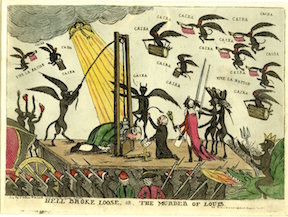 A little bit of hell broke loose in Napa Valley recently. And the devil still seems to be on the loose.
In 2016 a group of “environmentalists” who seem to be bent on rolling back the wine industry in the Valley gathered enough signatures to put an “Oak Woodlands Preservation” initiative on the local ballot. It was an onerous piece of legislation that would have essentially removed property owners’ rights to plant new vineyards in the Valley because five-inch wide oak trees are so critical to our economy and because the planning and political process that has left the Napa Valley watershed engulfed in oak trees is offensive since it has allowed one, single oak tree to be removed in favor of a vine.
The initiative failed. On a technicality. It got enough signatures, but local vintners and growers organizations strongly opposed the measure (why wouldn’t they?) and after a protracted court battle, the anti-farming measure never made it to the ballot.
Then, seemingly out of the blue, a couple of weeks ago the Napa Valley Vintners (which represents many of Napa’s wineries, though not all) announced they had come to an agreement with the above-mentioned environmentalists to put a new Oak Woodlands Protection initiative on the ballot. The initiative was filed with the County and all that was needed was enough citizen signatures.
The NV Vintners’ partnership on the new Oak Woodland Initiative with the same environmentalists they had so recently opposed took a few people by surprise. Particularly Vintner members…the vast majority of whom had no idea such an initiative was coming down the pike. Moreover, other local organizations including the Napa Valley Grapegrowers, Napa County Farm Bureau and the Winegrowers of Napa County had no idea an initiative supported by the more powerful Napa Valley Vintners was coming.
My sources tell me that a number of Vintner members showed up unannounced at the Vintners’ offices asking what the hell their Board of Directors had done? and that calls and emails from Vintners members resulted in the same question.
The best-articulated opposition to the fiasco came from Stu Smith, owner of Smith-Madrone on Spring Mountain who penned a letter to the Napa Register. Entitled “NVV (Napa Valley Vintners) Is Tone Deaf When It Comes To Land Use Politics” the letter is well worth a read to get a sense of what opposition to shutting down farming in Napa sounds like in its most reasonable and adamant form.
The Vintners public defense of their actions came in the form of a letter from Michael Honig, vintner and Chairman of the Board of the Napa Valley Vintners. The letter amounts to an “If you can’t beat them, join them” argument. And ends with this: “We are confident that ultimately, once questions are answered, this collaborative effort will be welcomed by both the community and the greater wine industry as a positive, proactive step toward protecting Napa Valley.”
About a week later, the environmentalists who worked with Mr. Honig and the Vintners filed a second initiative that is even more onerous than that which they collaborated on with the Vintners.
I don’t think the Napa Valley Vintners saw that one coming. They got stabbed in the back by their partners once their partners heard there was dissension in the Vintners’ ranks.
Last Friday, the Vintners lobbed their next volley in a letter sent out to the association’s members in which they announced they would, “Suspend our work on the compromise 2018 Watershed and Oak Woodland Initiative…Support a professionally-mediated consensus-building process that includes leaders from both the local wine and environmental communities…and…Work toward a February 1, 2018 deadline which would allow for any new proposed initiative to qualify for the November 2018 ballot.”
Let me translate that: “Shit…Ok…we heard you, members. Let’s talk with the understanding we have no commitment to support any initiative.”
It’s not easy to run an association as important and powerful as the Napa Valley Vintners. Their responsibilities are vast. The number of folks who rely on them is many more than you might imagine. And their ability to meet their responsibilities determines the kind of confidence that keeps them effective.
The problem for the Vintners didn’t begin when they launched an initiative without the support of their members. It began because Mr. Honig and his peers on his Board of Directors were correct in their assessment of the environmental politics of the Valley: They could not beat the environmentalists. The Oak Woodland initiative was going to be coming again and it has a good chance of not just getting on the ballot, but passing also.
That left the Vintners with a couple choices:
-Oppose the Initiative with everything they had.
or
-Join the process and try to protect the interests of their members best they could and leave future prospective growers screwed.
They chose the latter.
I think this is the wrong choice. First, the initiative is hogwash. It’s a solution looking for a problem. Second, fighting the initiative and making the case against the anti-farming nimbys and losing wouldn’t impact the Vintners’ power the way they think it might. Sure, some people might lose their jobs or board positions, but the inherent power of the organization wouldn’t have been weakened terribly.
In the end, it was the unfortunate way the Vintners handle their membership and, by extension, all growers and vintners in the Valley, by working in secret with nimbys and not polling their membership on the matter first. The vocal industry backlash simply gave the anti-farming contingent reason to throw the Vintners overboard and go with something more onerous than they originally had agreed upon with the Vintners.
If the Napa Valley Vintners, the Grapegrowers, the Winegrowers and the Farm Bureau decide to work together and with other allies to oppose the initiative, if they make the principled argument loud and clear, if they lobby the right people, if they spend some money to oppose the initiative, they could beat it back. It’s far from a sure thing, but it’s certainly worth the fight.


Ask Chuck Wagner how he is doing in Solano County on such issues, may be a very different story on this side of the county line. Business welcoming rather than business destruction.
We must find a balance between alcohol corporations and mother nature. Most Napa voters understand this. The board was right to seek a compromise. Greed is dripping from your pen, Tom.