
Is Wine Made in NY With Napa Grapes a “Napa Wine”?
 Someone is about to get screwed.
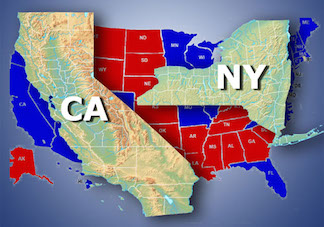
If a winery in New York purchases grapes from a Napa Valley vineyard, has the Napa Valley grapes refrigerated and shipped to its winery in New York, then crushes, presses and ferments those Napa Valley grapes into a wine, then bottles that wine, can we reliably say that the wine is a “Napa Valley Wine”?
The practical answer is definite. The philosophical answer is even more certain.
Currently, the practical answer is that currently the New York winery may in fact put “Napa Valley” on its label, but only if the wine is meant to be sold in New York and not to be sold in other states. The rules of the labeling road say that an appellation of origin may be placed on a label only if 1) the AVA is federally approved, 2) the wine is made with 85% grapes from the AVA being used, and 3) the wine is “fully finished” in the state where the AVA resides.
However, if this wine is not finished (read: fermented and bottled) in the same state where the AVA resides (#3 above) it sill may use the AVA on their label if it is only to be sold in the state where it was finished. In other words, the New York winery referred to above may in fact claim on its label that it is making a “Napa Valley wine” only if the wine is sold in New York.
The loophole that allows the New York winery to label in this way results from the fact that the federal governments labeling rules concerning AVAs and vintage don’t apply to wines that don’t enter into interstate commerce; that is, that aren’t sold outside the state where they are made.
So, why bring this all up and what about that someone who is about to get screwed?
Well, it turns out that a number of wineries and winery associations have helped convince the Alcohol and Tobacco Tax and Trade Bureau (who regulate alcohol labeling) to make a rule change that would stop letting that New York winery use “Napa Valley” on its label, even if it chooses to only sell the wine in New York. What is the 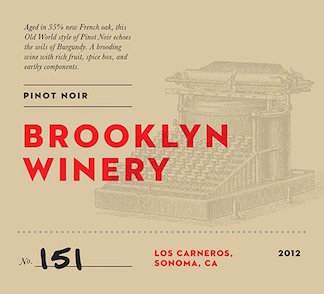 reasoning behind this change? The industry representatives believe that a New York winery making wine in New York with Napa Valley grapes and putting “Napa Valley” on its label then only selling that wine in New York:
“undermines the best interests of the consumer and the decades-old system of American viticultural areas”
They are wrong about that. But more on that later. It turns out the hypothetical New York winery isn’t so hypothetical.
Brooklyn Winery in New York has built a business of sourcing grapes from across the country, but mainly from New York and California. In fact, it has made the following wines:
2012 Mokelumne River AVA Zinfandel
Wine Enthusiast – 91 Points
2011 Oak Knoll, Napa Valley Cabernet
2012 Sonoma Valley, Sonoma County Cabernet Sauvignon
Wine Enthusiast – 91 Points
2012 Los Carneros Pinot Noir
Double Gold—San Francisco Chronicle International Wine Competition
All the wines noted above also carry the announcement on the label, “This wine can only be shipped within NY State” and by all accounts Brooklyn Winery has only sold these wines in New York.
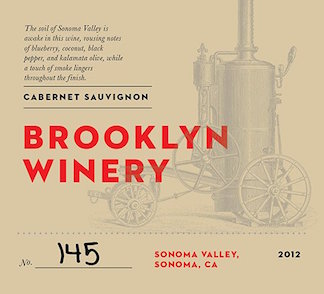 Under the newly proposed changes to label requirements, Brooklyn Winery would no longer be able to label these wines the way they do. They will, if they continue to make them, have to label them with the generic “red” designation, with no vintage and with no AVA since the wines are not produced in the state where the AVAs are located—even if they only sell them as they do now in the state of New York. The irony is that this will give the consumer far less information than using the “Napa Valley” AVA. And that can’t be in the “best interests of the consumer.”
The question arises, why ought Brooklyn Winery be punished in this way?
-Their labels accurately describe where the grapes came from
-Their labels accurately describe the vintage during which the grapes were grown
-There is no attempt to portray the wines as anything other than what they are
-The wines are, as the law requires, only sold in New York.
How does this undermine “the best interests of the consumer and the decades-old system of American viticultural areas”?
Of course it does not. In fact, these wines make the case that no matter where the wine is made, it is the grapes and their terroir that define the wine. Whether the grapes are turned into wine in Illinois, Florida, Burgundy or New York, the wine is still a reflection of the grapes and the terroir and region in which they were grown. Oak Knoll-grown grapes are not significantly more “Oak Knoll” if they are fermented into wine in San Diego, Napa Valley or in Brooklyn.
But this is exactly what is posited by a rule that a label can only use the grapes true AVA designation if the wine is produced in the state where the AVA resides. The only substantial difference between the rules of winemaking in California and winemaking in New York is that in California wineries may not chapitalize, while in New York they may chapitalize. But let’s face it, California wineries have learned a number of ways to chapitalize without dumping sugar into the must. The fact is, this rule change has very little merit in its current form.
Brooklyn Winery legally and ethically exploited the fact that this proposed new rule hasn’t applied when a wine produced outside the state where its AVA is located and is only sold in the state where it is eventually produced. Good for them. And as you can see, they have been rewarded for the quality of these wines in ways that other wines from the same AVAs have not.
This proposed change in the way the TTB regulates wine labels is going to be adopted. There are simply too many industry leaders and politicians representing industry leaders and associations supporting the rule change. Brooklyn Winery, according to an article in the Santa Rosa Press Democrat by Bill Swindell, is currently looking into whether they will be impacted by rule change. There lawyers will tell them they will be.
What’s true is that there are wineries that abuse the fact that federal labeling laws don’t apply to wines that are only sold in the states where they are made. Many a Texas winery will buy cheap bulk wine from California, have shipped out to Texas where it is bottled with a label that strongly implies it is made with Texas grapes.
What would be fair is for the TTB to find a way to let Brooklyn Winery do what it does, while prohibiting the wineries that abuse the loopholes from deceiving the wine buying public.
For the sake of promoting entrepreneurship and for the sake of liberty and for the sake of not further restricting what wineries and retailers can sell, I hope that Brooklyn Winery gets around the coming rule change.
If you would like to comment on the proposed rule change to how wines are labeled, you can do so here.


I see zero issue with the winery able to say Napa Valley on the label…..the one thing they can’t do is put estate grown….the Napa Valley commission is out of control within its own AvA and others….
Tom,
If you read the TTB rule change petition the proposed new restrictions go well beyond not using the area of appellation (Napa Valley in the example). The winery using imported grapes is also prohibited from using a varietal name (“chardonnay: for example) or a vintage year. What’s left is non-vintage “American white” or American Red.” Hardly a marketable wine. This will effectively shut down cross border grape sales. There won’t be much effect on California but I suspect that many small wineries in states where grapes are difficult to grow or where weather impacts harvests, like your hypothetical Texas winery, will be seriously impacted. The balance is truth in labeling versus trademark and geographical identification protection.
Where the grapes come from is the only criteria for how the wine is named. Some notion that a “Napa” wine HAS to be made in Napa is the height of narcissism. I live and work in the Napa Valley and I certainly recognize that the local wine industry thinks very highly of itself. I also see a lot of them making wine from grapes grown in other regions.
Living in Michigan, whose robust wine industry using local grapes sometimes encounters minor setbacks — like the occasional Polar Vortex — I find this proposal to be a travesty. When my in-state winery does need to source grapes elsewhere, as a consumer I’d like that information front-and-center, not ignored or hidden in agate type on the back. This proposal hurts consumers, damages wineries nationwide, and supports the behavior of the industry’s worst actors, like our unnamed Michigan winery that purchases grapes from wherever, puts no geographic indicator on the front label, and writes a fanciful back label calling the result “a taste of Northern Michigan.” Is that the type of behavior the TTB wants to encourage?
I agree with Tom that the proposed new rule is not the best of all possible worlds, however it is better than the status quo. Because of this: http://www.thedailymeal.com/news/drink/proposed-new-federal-law-would-do-away-misleading-texas-wine-labels/070516
Brooklyn will not be harmed significantly. First and foremost because they have a great product. But also, they can use other than the front label to state their case. The information can go on the back label, QR code, web site, wine salesman, facebook page. The change in Texas from the end of the FSITO fraud is simply game-changing.