
Women, Men and Wine—What’s the Problem?
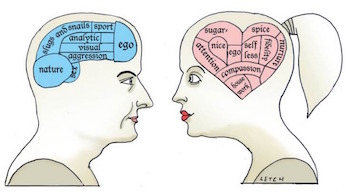 Monika Elling, a wine marketing consultant out of New York, recently reminded us in a Harpers article that women are under represented in the wine trade, particularly in the distribution tier. This is true. In fact I’ve been reading this claim a couple of times a year for the past 2 years.
“The products are crafted by men, sold by men but these men don’t necessarily know what women want…How different would it be if women were in the decision-making roles as to which brands to bring on, how those decision makers would view potential products that are currently being turned down in an all male board room?”
It’s an interesting question that Ms. Elling poses. But I wonder if the problem of product type that she alludes to isn’t a problem at all. Elling herself reminds us that 70% of all wine purchased in the United States is purchased by women. Either the men making decisions at the top are making really good decision where women consumers are concerned or the impact of having few women in the distribution side of the business doesn’t have much to do with product type. I think it’s the latter.
Elling suggests that other aspects of the wine trade would be different if women represented a higher percentage of its occupants: Communication would improve. There would be greater transparency. There would be a greater embrace of online communication and tools.
While it would be nice to see male/female imbalance in wine trade be remedied, I’m not convinced that these elements of the business she alludes to would change or improve. How they would change or improve with more women in the business is what I would like to read about. It doesn’t take much to explain that it would be nice to see more women in the business.
In 25 years I’ve worked with and for a number of women in the wine business. I’ve worked with women marketers, women winemakers, women winery owner, women retail owners, women communicators and women in the wine side of the restaurant trade. My experience is that they differed from men in those areas of the business in no substantial way.
And I’m still struck by the fact that 70% of the wine purchased in America is purchased by women. On the face of it, it looks like women consumers are being pretty well served by the male dominated trade. But I’m willing to listen to how we can get that number up to 80% and to how exactly the wine products women buy would be different if their were more women in the distribution tier or elsewhere in the wine industry.


It is not what’s on the bottle it is what’s in the bottle. We as wine ambassadors need to do a better job of introducing the AHA! moment in wine to all wine drinkers regardless of gender. We need to move the market away from brands and to true consumer education about the quality of the product and the story behind it. I would also point out that three new wine technology companies have been launched by women mine, Vinolytics, Ella Lister’s WINELISTER and Cathy Huyghe’s Enolytics. All three companies are intended to drive engagement with wine through better market insight and data analysis of the product.