Terroir is a Myth
 The idea that “Terroir” is the source of fine wine flavor is a myth.
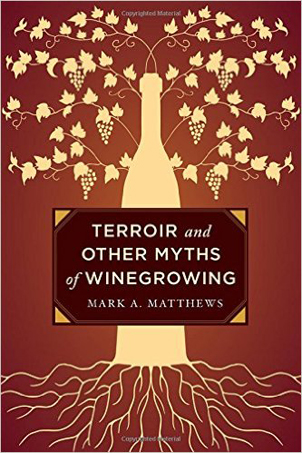
This is according to Professor Mark Matthews at the University of California, Davis in his new and controversial book: “Terroir and Other Myths of Winemaking.”
As the title of this new book implies, the myth of terroir is only part of Matthews’ investigation. This post wants to explore only that part of Matthews’ new work that addresses terroir.
In “Terroir and Other Myths of Winegrowing”, Matthews offers an extensive survey of the history of the use of the term “terroir” as it relates to winegrape growing. The “Myth” referred to in the title isn’t a dismissal of the idea that environment impacts grape vine growth and the wine made from the berries produced on those vines. Rather, he’s simply asking for more precision and accuracy when it comes to how we use and understand this powerful word. He is also suggesting that the emphasis placed on terroir when explaining wine character is in fact over emphasized.
It’s a view that is hard to argue with. In fact, I came away from reading Matthews’ essay on terroir more thoroughly convinced than ever that the idea of “terroir” is likely the most abused and often most useless word in the world of wine.
Perhaps the most compelling claim Matthews makes in his discussion of terroir is that excessive reliance on the concept of terroir in understanding the character of wine diminishes the role of winemaking and variety. Matthews writes, “The traditional view (Old World) is that it is the place, not the variety, which determines the wine; however, this view ignores the biological constraint the variety puts on the grape and wine.”
He is correct. If you want to understand the overwhelming importance of variety on a wine’s character, then simply compare a Merlot produced from a Napa Valley vineyard and a Merlot produced from a vineyard in Bordeaux. Those two wines will taste far more alike than will a Pinot Noir and a Merlot grown side-by-side in the same vineyard in either location. They will taste far less similar, if there is any similarity at all.
Perhaps one of the most fascinating ideas that comes out of Matthews extensive research into the use of the word “Terroir” going back centuries is
that in it original usage, the word was used pejoratively to describe a particular tastes in a wine. In fact, “terroir” was used to describe the quality of 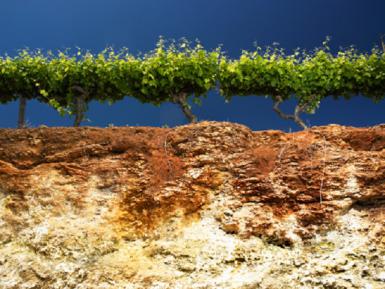 “manure” in a wine’s aroma and flavor. It seems pretty clear that originally the term terroir was used to describe the aromas and flavors that resulted from dirty winemaking.
Matthews also reminds us that the common view that soil is responsible for the taste of wine is a view not supported by our knowledge of soil’s impact on wine flavor. This view is related to the notion that a wine gathers its flavor from the composition of the soil; that a chalky soil results in a chalky flavor in the wine, for example. The taste of wine is not derived from soil. Matthews notes that few if no molecules related to flavor are brought up through the roots to the berry, nor through the leaves to the berry.
Finally, Matthews reminds us that where soil does impact berry composition and wine flavor is in the soil’s ability to hold water or, put another way, through the soil’s drainage ability. A soil’s texture and water holding capacity impacts the vine, shoot growth and the berries in ways that are themselves impacted by rainfall and irrigation.
“Terroir and Other Myths of Winegrowing” is a book that is well worth reading, particularly by those who work in the wine industry either in the vineyard, in the cellar or in marketing. The romantic idea of terroir will always tug on both the consumer and those who sell wine to the consumers. When you stand in the middle of a vineyard composed of rolling hills, shifting shadows, colorful soil and notable temperature changes it is very easy to link the character of wines produced from the property primarily or even exclusively with the landscape, or terroir. I can’t imagine that this deeply researched and well written book will change this phenomenon. However, it should provoke in many a much more careful use of the term “terroir”


Pity the poor sommeliers.