
Grapes, Not Wines, Are Impacted by AVAs
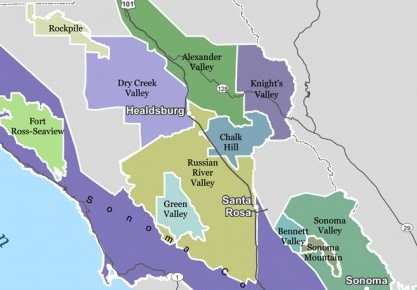 There is a good case to be made that when comparing the French Appellation d’Origine Controlee (AOC) system with the American Viticultural Area (AVA) system, it is the American system of delineating grape growing regions that is far more invested in the theory of terroir than the French AOC system.
This point concerning the relative commitment to terroir has been driven home to me while doing some work with the Petaluma Gap Winegrowers Alliance, which is currently in the process of developing a petition for AVA status for this region located in southwest Sonoma County. That petition, once developed and submitted, will provide information to the federal government (where AVAs are approved) on the climate, geography, soils and history of the Petaluma Gap region. It will be on this terroir-driven basis alone that the TTB evaluates the petition. In fact, these elements of a region have always been what was taken into account when an AVA has been approved by the federal government.
But consider the French AOC system. In order for a wine bottle to don the Chablis, Pomerol, Bordeaux Supérieur, Bâtard-Montrachet or any number of other appellations, much more than simply controls on where the wine’s grapes were grown come into play. The French AOC system goes well beyond simply drawing lines around a region. AOC rules, unlike AVA rules, dictate (or at least strongly nudge) a wine toward a specific style. AOC rules might dictate the age of the vines to be used, the amount or allowance at all of irrigation, the potential alcohol at harvest, or the specific grape varieties that may be used among other rules. America’s AVA rules do nothing of the sort. If approved, a Petaluma Gap AVA located on a bottle of wine will simply guarantee to the consumer that the wine in the bottle was made with grapes grown almost exclusively in the Petaluma Gap AVA.
The terroir-driven (and not style-driven) nature of the American Viticultural Area appellation system begs a question: Should an individual AVA be best understood by the impact the terroir commonly has on grapes grown there or should it be best appreciated for the character of the wines commonly resulting from grapes grown in the AVA? The former understanding of an AVA is much more helpful and even aimed at a winemaker’s perspective. On the other hand, the latter understanding of an AVA is much more consumer-oriented.
The problem, however, is that in trying to embrace an idea of what a specific AVA ought to produce in a wine, the lack of rules and regulations governing how grapes may be grown and how wine made be made that carry a specific AVA on the label means the likelihood that a wine is going to taste like what we think the AVA will make it taste like is up to the whims of a winemaker who is free to do whatever they want to do to the wine during production. Moreover, growers too can have a huge impact on either enhancing or obliterating any thread of character we may consistency expect to find in a wine hailing from a particular region.
And yet, despite the greater likelihood that a winemaker or grower can obliterate any character that should be inherent in a wine tied to a particular AVA in America, I would still argue the AVA system is much more terroir-driven than 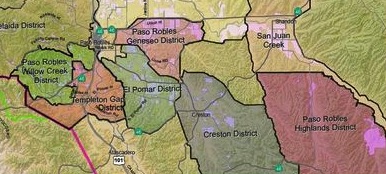 the French AOC system with all its rules on grapegrowing and production. And this is precisely why I think it is safer to attempt to understand the American AVA as a region that commonly has a specific impact on grapes, rather than producing wines of a particular style. This is not, however the path that either the wine industry in America nor its more deeply interested consumers have followed.
Of course, understanding AVAs as descriptions of how a region’s terroir will impact grapes rather than how it will impact the wine is decidedly not consumer friendly. This understanding of AVA’s at best tells the consumer where the grapes that resulted in the wine came from. But that’s all. And this is exactly what the federal government meant AVA’s to convey to consumers when it instituted its federal AVA system.
Still, over the past 30 years and more winemakers and consumers and media have been trying to define AVA’s by the character of the wines produced from their grapes. Yet this is esoteric business and despite the efforts made, only very general conclusion about any AVA’s wines have been drawn. It’s notable that one of the most impressive websites every created (AppellationAmerica.com) had as its mission to explore this very question of AVAs impact on wine styles. Appellation America gathered the most impressive collection of wine writers ever assembled behind one editorial project. It failed to attract enough interest to remain financially viable.
 One of the reasons I’ve come to believe that the most reliable way to understand AVAs is to focus on the impact an AVA’s terroir has on its grapes, rather than its wines, is from working with and paying careful attention to this region now seeking AVA status: The Petaluma Gap. Its climate is perfectly distinguishable due to the constant high winds that run through the Gap. When you talk to winemakers that work with Petaluma Gap fruit and with grape growers who cultivate grapes in the region, they can tell you with precision what impact these high winds and relatively cold temperatures have on the grapes. However, when you ask them what kind of impact the terroir has on the wines produced from these grapes, they hedge. They won’t tell you they don’t know, but they recognize that identifying the impact can’t be done with near the precision of identifying the impact of the terroir on the grapes. This is due mainly to the fact that winemaking techniques run the gamut and comparing one wine to another, even of the same variety, is difficult.
I suspect winemakers in most AVAs, even those like the Petaluma Gap that are well-drawn, have the same problems.
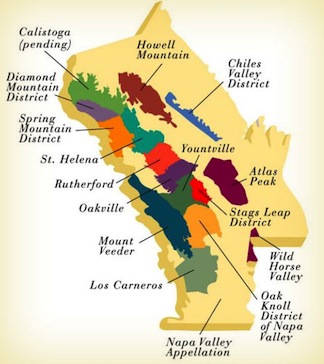
The only solution to the problem of making AVAs consumer friendly is study. Regular, consistent, rigorous study of wines produced from grapes grown within a particular AVA. Some AVAs, being so large and having such a diverse set of terroirs within them, won’t lend themselves to this kind of study. However, AVAs like Green Valley in Sonoma County, Fort Ross-Seaview in Sonoma County, Atlas Peak or Spring Mountain or Howell Mountain or Mt. Veeder in Napa Valley, or the coming Petaluma Gap AVA are drawn in such a way that after many years of careful study, we may in fact be able to say what type of character a wine is likely to possess if winemaking or grapegrowing techniques are not too terribly overbearing.
However, until these kinds of long-term studies are conducted, the most reliable thing we are likely to be able to say about an AVA is that its terroir will have a certain impact on grapes grown within it.


Great post Tom. We are weighing these issues in McLaren Vale. We’re a few years into a 10-20 year annual vintage tasting study of un-oaked wines from a sub-district map built up from geology and soil mapping to test our theory. Realising we need to add more layers – topo, temps, rainfall, wind – and lots more sensory data before we can be very conclusive. Fascinating stuff.