Re-Defining Dishonesty in the Wine Media
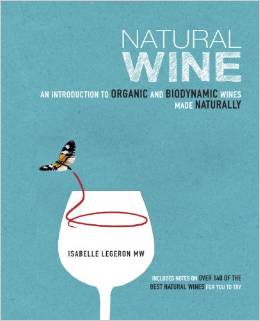 If one is going to hold forth on the important subject of authenticity in wine, success and utility demands an honest approach. Anything less courts a descent into ideological stridency or, worse, deception. It’s unfortunate that in her new book, “Natural Wine”, author Isabelle Legeron, MW, has provided readers with the most comprehensive example yet of the now familiar promotion of “Natural Wine” through dishonest discourse on this subject.
It’s best with this kind of charge to get right to it.
Legeron purposefully leaves the impression that all but her beloved “natural wines” are chalked full with additives. She leaves no grey area. Either wine is natural (“pick grape and ferment”) or it is a marketing-driven, additive filled, commercial bottling designed to enhance a bottom line.
No where in the text of this book does Ms. Legeron pay tribute to the thousands of independent wineries across the globe who either currently or over the past several decades have pursued the path of minimal intervention, sought through diligent working of the land and careful hands-off efforts in the cellar to create a wine the depicts a unique terroir, or sought to minimize as much as possible any technique that adulterates the juice pressed from grapes—all without ever resorting to the use of the nebulous and incoherent term: “Natural Wine”.
Natural wine is real. Everything else it is implied is a concoction in Ms. Legeron’s world.
One strategy she uses to tug this wool over our eyes is by reminding us that large companies produce a great deal of the wine that is drunk:
“Three wine companies accounted for nearly half of all the wine sold in the United States in 2012, while in Australia the top five accounted for over half of the national crush.”
This leads Ms. Legeron to conclude that “There is a disconnection between what wine is and what it appears to be.” She promotes the idea that there is deception afoot. “People still believe that wine is produced by humble farmers with as little intervention as possible—and brands everywhere are happy to comply with this illusion.”
However, in purposely attempting to characterize wine as the province of huge multinational agrichemical companies, she never mentions that overwhelming majority of wines produced in the world are made and bottled by companies that are family owned, small wineries. By studiously ignoring this salient fact, she forcefully implies that wine is either natural or industrial. Yet Ms. Legeron must know a far more accurate description of the wine world would one in which thousands of small family wineries compete against a handful of commercial brands.
This kind of deceptive description of the world of wine is based on ignorance at least and dishonesty at most. She simply isn’t willing to deliver an accurate picture of the wine world. Instead, she provides this wildly inaccurate and biased picture of wine:
“Most wine today, including expensive so-called ‘exclusive” examples, is a product of the agrichemical food industry.”
What is particularly telling about the deceptive rhetoric in Ms. Legeron is that she never names names. She does not identify which “exclusive” wines are tools of the agrichemical food industry. She does not name the large, multi-national wineries that are industrial wine producers. Instead, she attempts to leave the impression that the thousands upon thousands of small, family owned, self-sustaining, responsible artisan growers and wineries across the globe are just processing wine with as much manipulation as possible.
This deception it turns out is absolutely necessary to promote the notion that “Natural Wine” is the only antidote to the concocted wine that has, in her view, taken over the world; that the “Natural Wine” movement is home to the only source of real, authentic wine.
The problem with this rhetorical strategy to promote “Natural Wine” is that it leaves her and other proponents of the movement without any room to complain when some declare, without naming names, that “Natural Wine is nothing more than oxidated grape juice served with a microbial soup. Can Legeron really complain about such a broad anti-“Natural Wine” brush when she is indicting all other wines with a ten foot wide roller brush that paints over the entire would of wine with one “swoosh”?
Notable is Ms. Legeron’s willingness to admit in her new book that one problem with the “Natural Wine” movement is that the very phrase, “Natural Wine”, has no agreed upon definition, let alone a regulated description. Anyone can use the term for any wine. More importantly, she recognizes that there are any number of better terms to describe what “Natural Wine” producers are doing. She even suggests a number of alternative phrases for these wines including: “live, pure, raw, real, true, low intervention, authentic and farmhouse”. But even following this bit of rationality, Ms. Legeron can’t seem to help herself and she descends into dishonesty again:
“But it is the term most commonly used globally to describe wines of this nature. For whatever reason people all over the world have chosen to use the term “natural” in the face of all the alternatives, to describe healthily grown, nature-friendly, low-intervention wines that truly express their place and origin….So, natural wine it is.”
In further defense of using a wholly inadequate, nebulous and deceptive term to describe her favorite producers, she quotes Piedmontese wine grower Stefano Bellotti of Cascina delgli Ulivi and by doing so demonstrates exactly how willing she is to embrace a completely irrational approach to understanding both wine and critical thinking:
“I’m not thrilled about the term ‘natural,’ but that’s the way it is. if you don’t like the word ‘table,’ you can’t just call it a chair.”
Ms. Legeron knows she is under no obligation to use the term “natural wine”. She knows there are better, more descriptive, more honest phrases that could be used to describe this type of wine making. In the end however she admits that she chooses the phrase “natural wine” because it has caught on, indicating that she understands that the term “Natural Wine” is a marketing tool. This makes it difficult to take her seriously when she complains that most wines are commercial creations and driven by a bottom line. It’s absolutely clear that Ms. Legeron is willing to compromise on the simple issue of honesty in order to put these wines she likes in the best light possible.
I’ll end this review by giving one more example of the many in which Ms. Legeron chooses dishonesty over honesty. In a chapter entitled “Is Natural Wine Better For You” she quotes American wine grower Tony Coturri:
“You can’t keep putting this stuff in your body. You get allergies. Skin problems. Your immune system collapses. I am old enough now to know people who drank wine their whole life and can’t drink it any more, not because of the wine, but because of the additives.”
Ms. Legeron is the final arbiter of what went into this book. In this case she chooses to end a chapter on the health effects of “Natural Wine” by leaving the impression that drinking anything other than “Natural Wine” will leave you unable to drink wine anymore because the additives in everything but natural wine will harm you.
There is nothing about this new book, “Natural Wine”, that is rigorous. Very little of it is honest. It is a propaganda tool that verges on libelous. It uses rhetorical tools that shamelessly attempt to elevate “Natural Wine” to a level it does not deserve and does so by attempting to paint all other wines, including all those produced by some of the most conscientious, small, artisans who ever made wine, as industrial swill.
I think it was always inevitable that a book like this would be published. The “Natural Wine” movement for years has traded on deceit, innuendo, bad science and unfounded accusation. What’s a shame is that a member of that elite group, Masters of Wine, had to write it. It brings shame upon that hard-earned designation.


Thanks for writing this comment. Ms Legeron’s black and white rhetoric is a much needed reaction to the industrial wines of the world. I work with several small, family operated wineries who practice organic agriculture. We know that our biggest competitors are industrial wineries who are able to make wines at much cheaper prices and providing distributors with everything they need to sell the wine given their large size and distribution power. HOWEVER, Ms Legeron is NOT a good voice for us. Her, and others like her, are taste nazis who try to impose form over substance allowing for many defective wines to pass for “purity”. Rather than focus on the important issues of how industrial bottles squeeze small family farms, how they referment grape must to make wine thus making wine out of by-products, how they add countless chemical additives to wines that small farms deem to be “not of good enough quality” for their consumers… she turns it into a battle of (self) righteousness.
The great god, Bacchus, knows me well for my willingness to criticize swill and to love great wine. If there is one thing I have learned above all else over the years, indeed decades, of tasting wines blind, it is that Product and not Process is the measure of wine.
There are some very fine natural wines; there are some very fine biodynamic wines, there are some very fines wines made by all kinds of careful practices.
And there are some very lousy, oxidized, incredibly disappointing wines made by those processes. One cannot believe in wine by process anymore than one can believe in wine because of label contents. It is nonsense of the first order.
But, Tom and Matteo, both, you are engaged in a bit of “process choosing” yourselves, and it is my belief that you go too far.
Great wine in this world is not limited to small, artisianal produceers. That a winery is big does not make it bad. That a wine comes from Gallo or Constellation or Diageo or Kendall-Jackson does not mean that the wine is filled with additives and emollients and seasonings and curatives. In taking the more enlightened stands that you espouse, you are still throwing a whole lot of wine under the bus, and that is unfortunate.
Hi Tom,
Ms. Legeron is an MW (Master of Wine), not Master Sommelier.
Is Legeron’s stance polarized and dogmatic? Certainly. Has she earned a reputation as an inflexible and opinionated judge of wine? I’ve witnessed it firsthand. Does she overstate her case out of the need to raise awareness and pull back the curtain to reveal the unethical practices that abound in our industry? I believe so but if her goal is to get the industry buzzing about the definition and commercial viability of natural wines; I’d say that her approach, however short sighted, is working.
How does she deal with biodynamic and organic wines? And how does she deal with processes that don’t “add” chemicals to wine, like reverse osmosis and cryoextraction?
Mr. Wark, as usual, your logic is so twisted that it doesn’t simply border on absurdity, it absolutely wallows in it. There is, at the most basic level, a difference between “implicit” (which seems to be your favorite word) and “explicit.” Whereas Ms. Legeron has undoubtedly written a positive book called Natural Wine, you see negativity in passages unspoken. Everything for you is imply, imply, imply; as if putting words in other authors’ mouth is a legitimate form of criticism.
When are you going to learn to respect all sides of this ongoing dialogue instead of continuing to be a myopic shill for mainstream parts of the industry? Many of us write about all these different sides, and we don’t seem to have a problem with one or the other. I know, I know: I don’t have to read your posts, but nonetheless I know that many people do, and they’re getting a sad and twisted view of the industry.