
Middle Aged Wine: The Good, Bad and Worst News
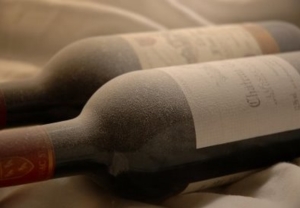 Here’s the Bad News: The vast majority of wine critics, wine reviewers and wine publications won’t review wines that are more than 3 or 4 years past their vintage dates.
Here’s the Good News: If wine critics, wine reviewers and wine publications did review wines that are 6-10 years past their vintage dates many consumers would love that.
Here’s the Worst News: If consumers did have access to reviews of wines 6-10 years past their vintage date, they probably couldn’t find them to buy anyway.
What a service it would be, educationally and practically, if committed wine lovers could find reviews of wines that are not brand new. How many of us right now have wines in their cellar that are 6, 8, 10 years old, that we just haven’t gotten to drinking. It would be a real service to have a sense of where they were in their evolution. Furthermore, for those of us that read reviews simply to educate ourselves and not merely in preparation to spend money, we could round out our academic education through exposure to the characteristics normally found in semi-well aged wine.
The fact that these kinds of wine reviews are almost never published tells us that those who review wines are working primarily on behalf of the producers, rather than the drinkers—whether they plan this or not. Current and now traditional marketing cycles in the wine industry force producers to begin to sell vintages no more than six months or a year after bottling. And this is, then, when bottles go out to the critics and publications.
This fact produces a number of outcomes:
1. Wines are often produced to shine, as it were, when young.
2. Reviews of wines that are so young often tell only a one-sided story
3. The notation on many reviews noting that the wine will “drink well between Year and Year” are half guesses, not solid guidelines.
4. Consumers have it instilled in their mind that wine is best drunk young.
This is mainly moot though, isn’t it. As I mentioned, it’s extraordinarily difficult to walk into a wine shop right now and pick up a 2004 Cabernet Sauvignon or Pinot Noir or Bordeaux or Argentine Malbec or Barolo. In fact, if a producer did want to hold back their vintages many more years than normal before releasing them, the look on shop owners face would tell this store: “What the heck is wrong with this wine that they could not sell it and they still have it in inventory…I’m not going to be the dope to buy this dreck.”
It’s a shame. So many California Cabernets and Pinots and Zins, for example, are absolutely delicious at 10 years of age and in fact deliver a different kind of experience. That experience is quite often much more appropriate with food too.
But it’s up to us, the consumer. We are the ones that will need to be responsible for examining the middle-aged wines, the wines that are 6, 8 or 10 years out of vintage. We can neither rely on retailers carrying any real supply of aged wines and in turn, no wine publications or reviewers will attempt to cover the subject of aged wines on anything like a regular basis.


So when’s your cellar tasting? I’ll be right over to assist in getting this valuable information out
to consumers. 😉
Tom,
It isn’t just the wine media who are falling short on this subject. (Although to their credit, Robert Parker and James Laube have consistently conducted retrospective tastings of California Cabernets at 10 and 20 years of age.)
It is also the consumers.
For your readers who reside outside of Los Angeles, and have not been exposed to the legacy of Corie Brown’s writings for The Times over the years, let me proffer this article on how wine enthusiasts with a hunger for history can throw their own retrospective tastings via discerning purchases from the wine auction houses.
~~ Bob
From the Los Angeles Times “Food” Section
(April 23, 2008, Page F1ff):
“It’s Vintage Napa”
[Link: http://articles.latimes.com/print/2008/apr/23/food/fo-wine23%5D
By Corie Brown
Times Staff Writer
Tom –
I represent Fred Scherrer in Illinois, whose current release Cab is 2007. He and I have this discussion endlessly and it has literally taken him years to have people notice his efforts, in part because requests for samples almost always are vintage specific. “For our review on Sonoma 2012, please send…” There are myriad examples of this, and certain writers have started requested “back” vintages, i.e. Fred’s current releases.
On the commercial front, we are starting to see an advantage to this as Fred releases 3 or 4 vintages at a time with a sliding price scale. I thought this would have been an instant hit on and of premise, but it has taken time – I think off premise, middle age wines sometimes look forgotten, and I can’t tell you how many times we are asked when we are going to “close out those older Scherrers”. That is starting to change, but slowly.
You’ve hit the nail on the head with my experience with Fred.
Damien
Tom, I would love the chance to write about and review older vintages on biggerthanyourhead…but where are such wines? Producers don’t send out those wines for review. I see older years of cabernet in retail stores occasionally, but I’m a journalist, not a plutocrat; I can’t buy wines at those prices. California winemakers: consider this comment a plea.
As the Petaluma Gap moves forward with our pursuit of recognition we’ve been discussing that we need to focus on showing the beautiful aging potential of our wines as part of who we are. So you can count on us to start doing our part from the producers side.