
The Wine Organizing Principle: First Varietal, Then Terroir
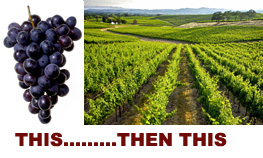 If a Sonoma Pinot Noir tastes much more like a Burgundy Pinot Noir than it does a Sonoma County Zinfandel, isn’t this a very strong argument for making varietals the organizing idea behind wine?
This is the question that occurred to me when I read Andrew Jefford’s article in Decanter that made the opposite case. Jeffords, who is a very clear-headed, succinct and thoughtful writer, gave us the money quote to his argument early in the article when he wrote this:
“If we were to regard place and the cultural traditions of place as the primary translators of wine flavour, and variety as secondary and anecdotal, we’d be wiser wine lovers.”
My thinking is this: before one delves into the cultural and terroir aspects of wine, one must first understand the most important building blocks of wine flavor and aroma. And that is most certainly linked to variety. This is why Pinot Noirs from Sonoma, Burgundy, New Zealand and Oregon have more similarity of aroma and flavor than Zinfandels, Cabernets, Grenache, Syrah and Pinot Noir all made from grapes grown in the same vineyard in California or anywhere else.
Jefford’s case relies a great deal on recent discoveries surrounding the DNA of grape varieties. He writes: “the more that I consider the highly technical distinction between variety and mutation; and the more that DNA insights reveal genetic links between varieties that make absolutely no sense whatsoever in relation to aroma and flavour; then the more questionable our attachment to the notion of variety begins to seem….the implications of genetic damage or errors in the DNA of a single variety can be far more consequential, to the human eye, nose and mouth, than the DNA boundary markers between varieties, even though that damage or those errors might be minute or insignificant in the DNA profile as a whole. It’s, um, weird.”
His is an excellent article and thought-provoking. I recommend it highly.


nonononononono–if varietals are the key, there would be more sameness, this is California triumphalism (though sincere), dirt’s for more than drainage (at least, and there’s more, Andrew’s got a good point).
Brian: Varietals already ARE the key and always have been. I know this because when I taste a Red Burgundy and a White Burgundy grown in the very same vineyard, next to each other, they taste and smell nothing like the other.
That said, Andrew DOES have a good point, but it’s a point that needs directing at the most dedicated wine geeks who care greatly about appreciating the nuances that a particular piece of dirt will add to a wine.
Wine knowledge is like any other category of wine knowledge: It is organized into sets. Understanding a given wine you have a number of sets or buckets that need to be filled to understand the wine. First, is what’s the grape. Second is what’s the style of the varietal. Then, what’s the terroir and vintage.
Also, any piece of ground in Burgundy or Bordeaux or Napa has very little meaning and can’t be understood…until you plant a particular variety in that ground.
Simple to solve: enter in the same vineyard were multiple varieties are grown and tell me if they taste the same.
Any winegrape farmer can tell you that varietal comes first for essential characteristics. Location related distinctions are the frosting on the cake. There quite simply is no other valid perspective.
You all mean Varieties, right? Ah, never mind… 🙂